Magnetic separators for food processing in the UAE
Every food line sheds metal. Sieve wire snaps, bolts work loose, mixer blades wear, and raw materials arrive with rust and iron fines already in them. A magnetic separator sits in the product flow and holds on to that ferrous metal before it reaches a mill, a filler or a customer.
Hydra is a Goudsmit Magnetics dealer and supplies the full Goudsmit range of food grade magnetic separators in Dubai and across the GCC: grate magnets, drawer magnets, liquid trap magnets and inline magnets for powders, granules, liquids and pastes.
Why food processors need magnetic separation
Foreign body control is part of any HACCP plan, and metal is the hazard auditors ask about first. Food safety authorities in the UAE, including Dubai Municipality and ADAFSA in Abu Dhabi, expect food businesses to run HACCP-based systems, and certification schemes such as FSSC 22000 and BRCGS require documented controls for physical contamination.
Magnets are usually the first of those controls. They catch the metal early, while it is still a loose particle, and they protect equipment downstream. A stray bolt that a grate magnet holds at the intake hopper is not going to damage a hammer mill. The metal caught at each point also tells you where it came from, which is something a reject bin at the end of the line can't do. Our guide on how magnetic separators prevent metal contamination shows where to place them on a typical line.
Grate magnets and magnetic grates
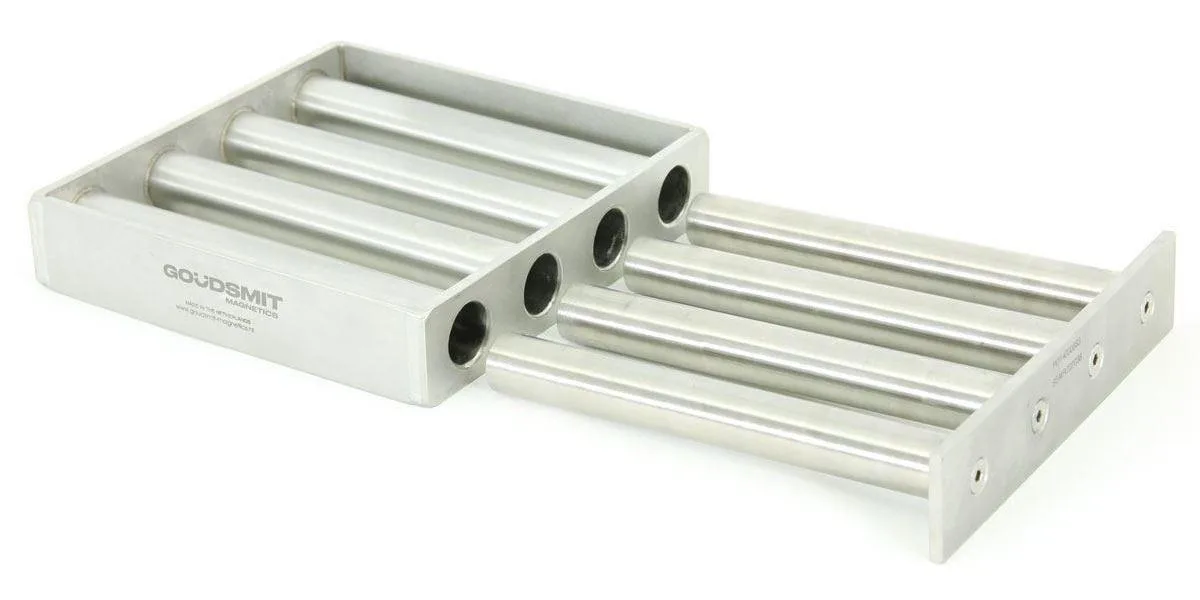
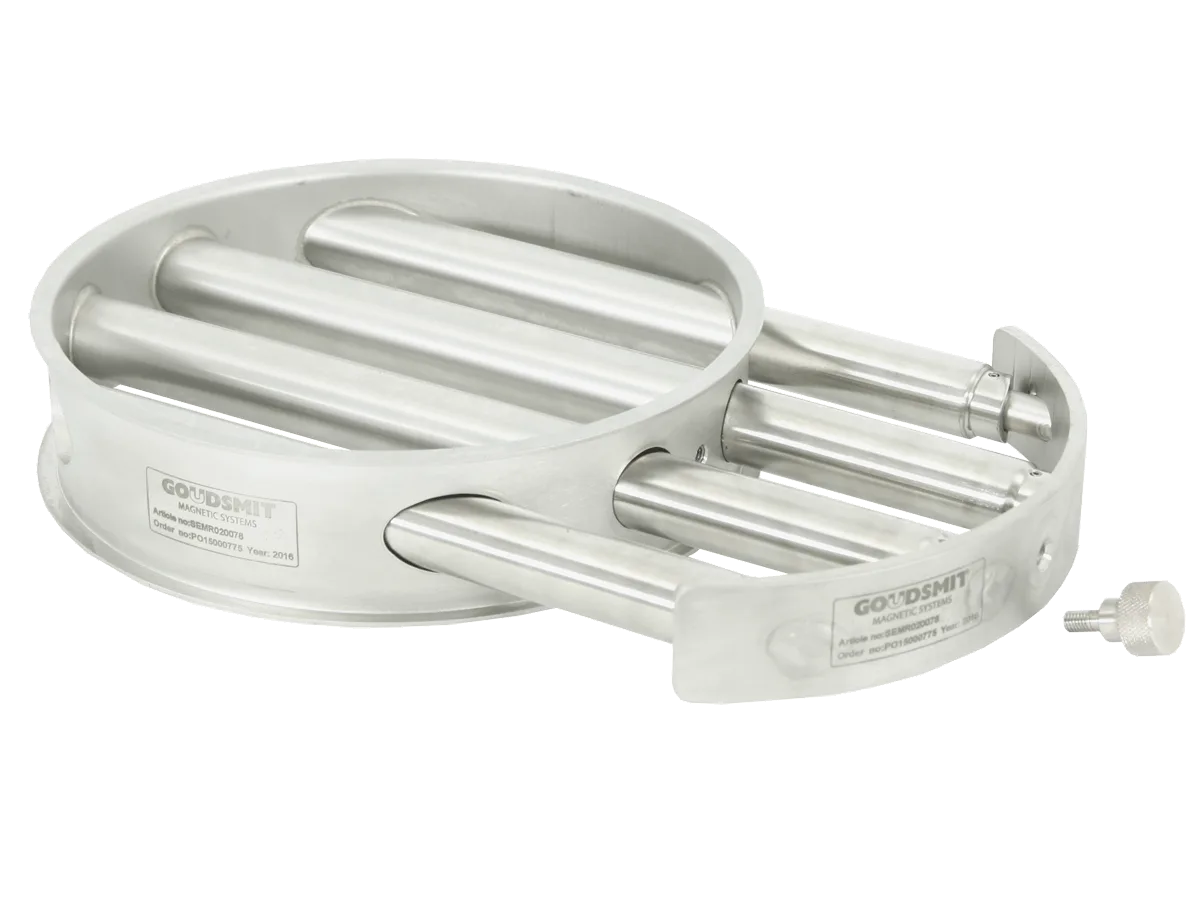
A grate magnet is a frame of stainless steel magnetic tubes, spaced so that free-flowing product falls between them. Each particle has to pass close to a magnet surface, and ferrous metal stays behind. Grate magnets go into hoppers, intake points, bag-tipping stations and the outlets of sieves.
They suit sugar, salt, flour, rice, grains, spices, coffee and other dry products that flow well. Goudsmit makes them in round and rectangular formats, and the easy-clean versions let you wipe the tubes clean without taking the grate out.
Rectangular magnetic grid. Image: Goudsmit Magnetics
Drawer magnets
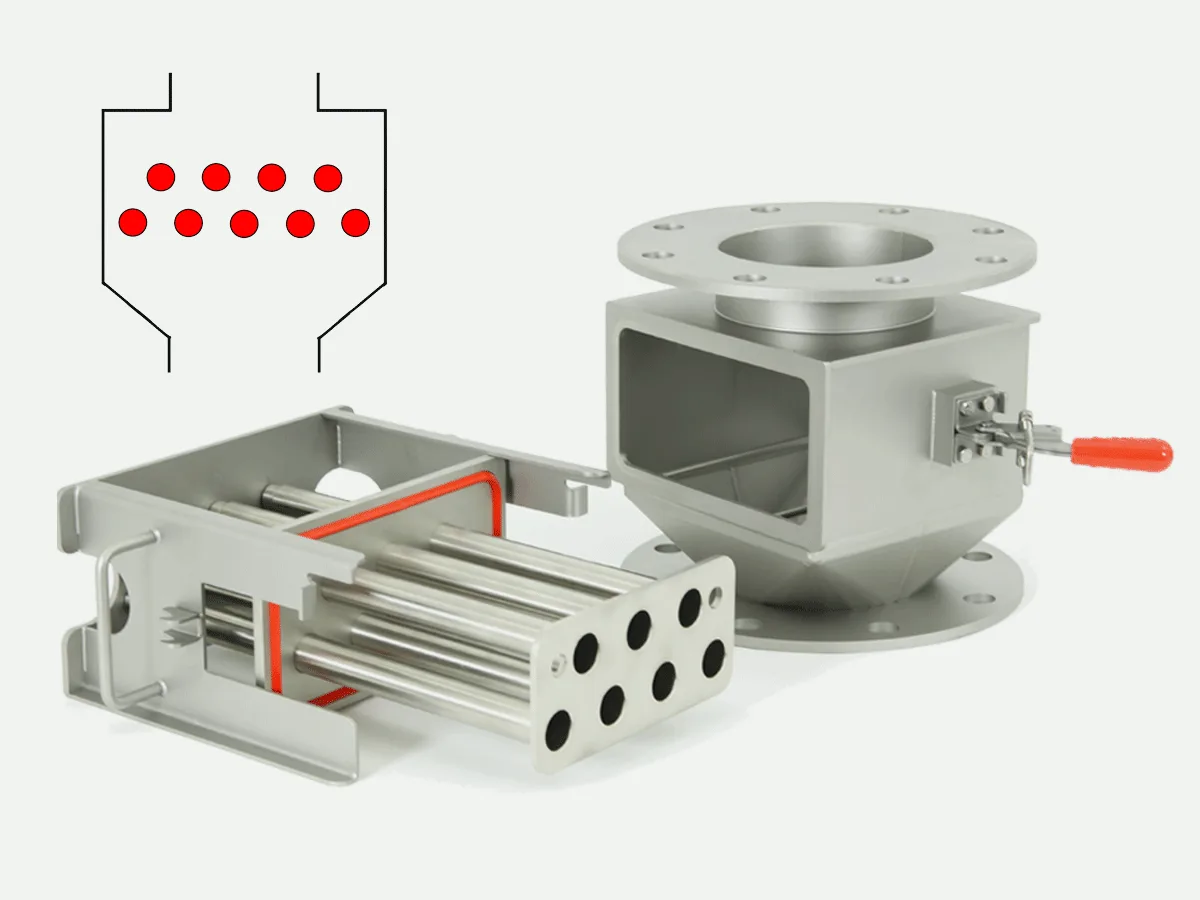
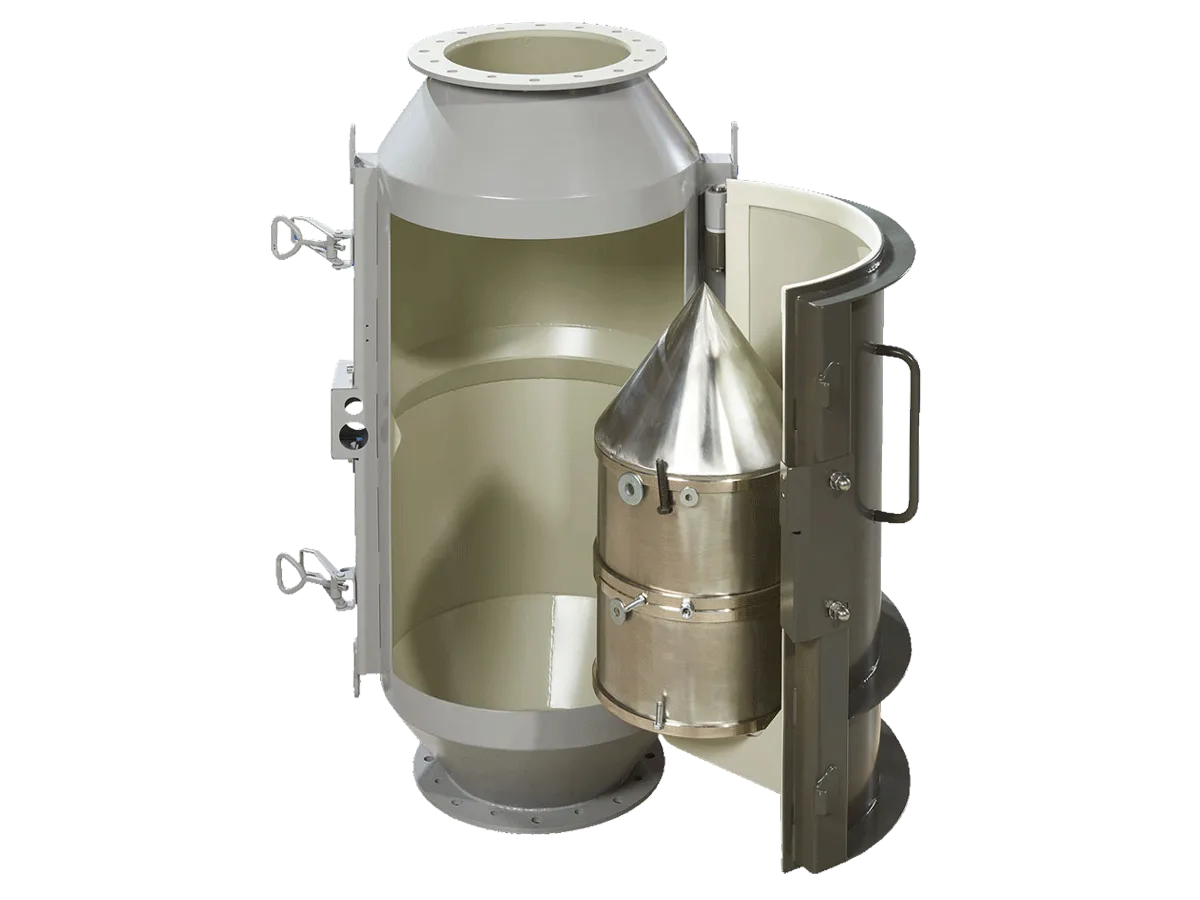
When product moves through a closed vertical chute, a drawer magnet is the usual answer. Goudsmit's Cleanflow units are a housing with one or more grates that slide out like drawers for cleaning, so the magnet can be inspected without opening the line. Manual, semi-automatic and fully automatic cleaning versions are available, along with dust-tight and pressure-tight housings.
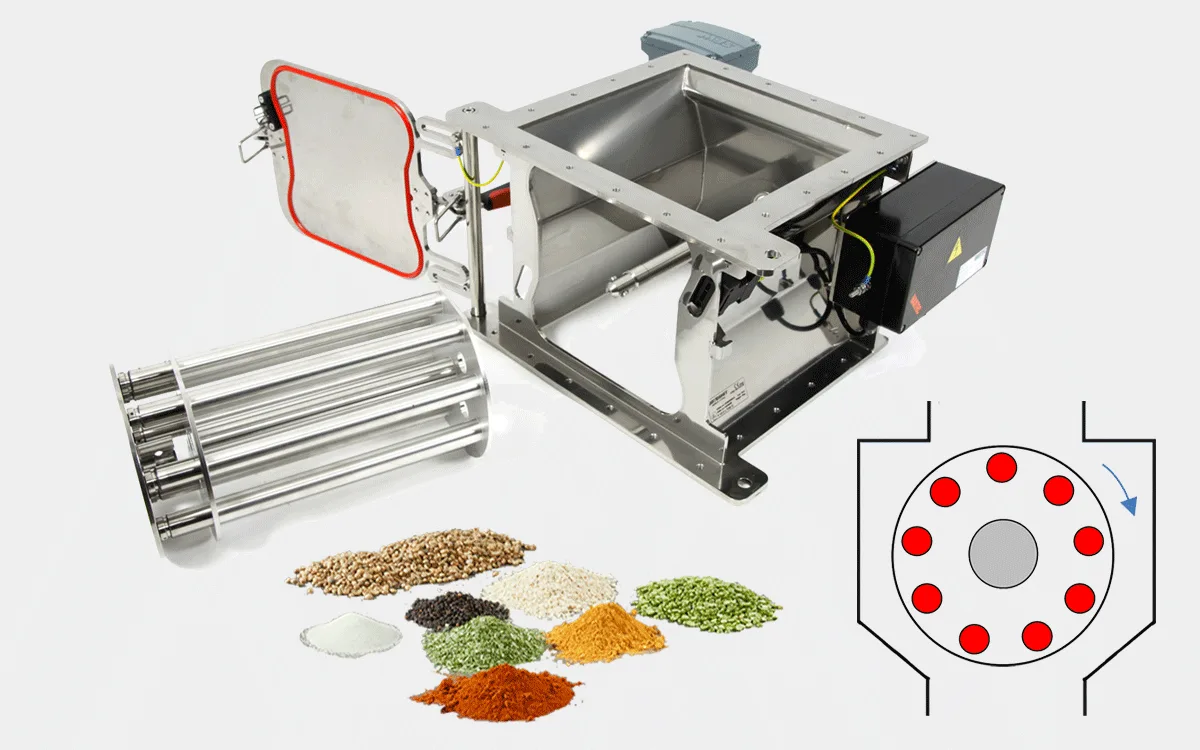
Powders that stick or bridge, such as milk powder, cocoa, sugar blends and premixes, can clog a static grate. The rotating Cleanflow has a grid that turns slowly to keep the product moving past the tubes.
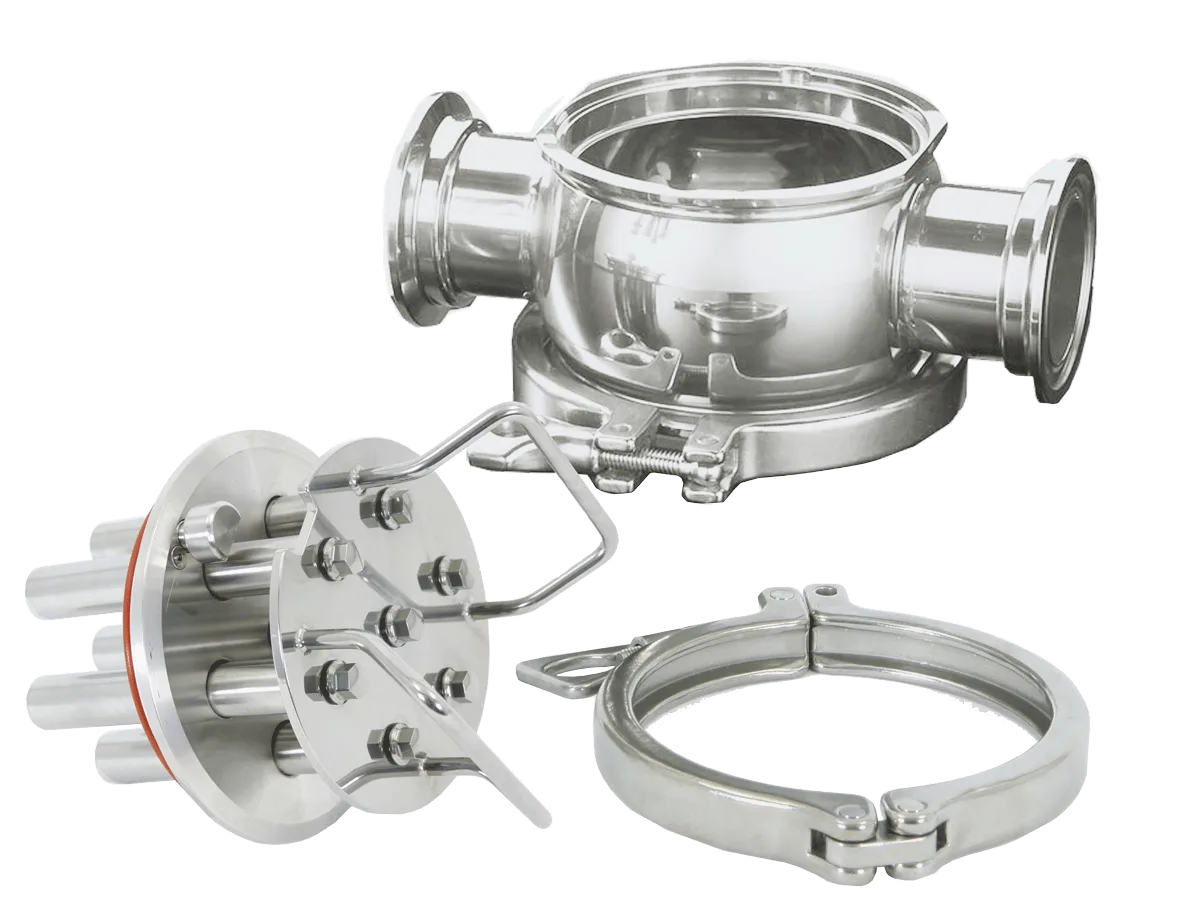
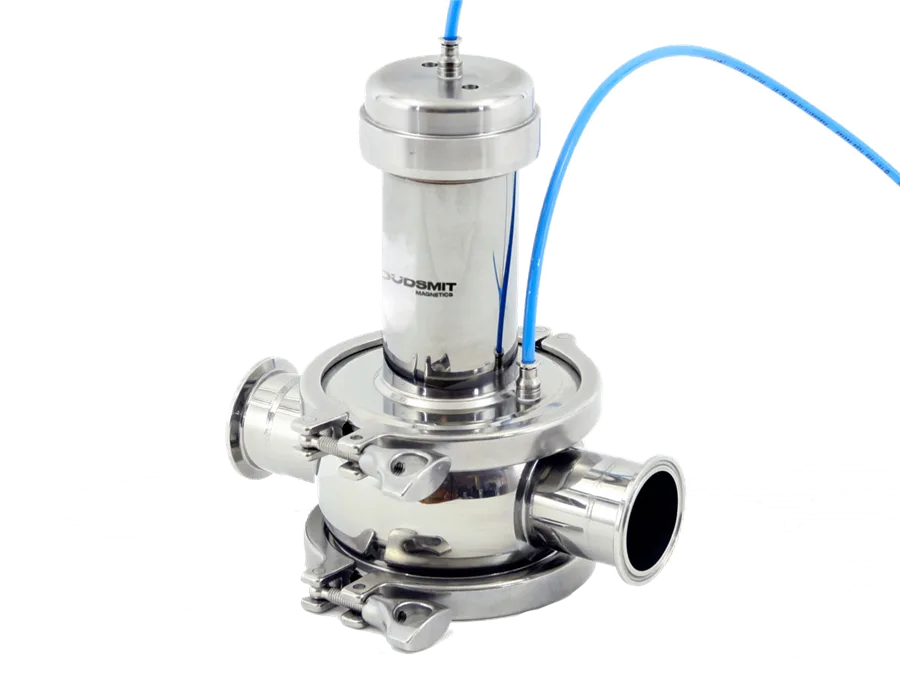
A liquid trap magnet, also called a magnetic trap or hygienic magnetic filter, is a pipeline housing fitted with magnetic tubes. Liquids and pastes flow around the tubes, and iron particles collect on them. It goes before pumps, homogenizers, heat exchangers and fillers, the equipment that suffers most from abrasive particles.
Typical products are sauces, ketchup, juices, syrups, milk, liquid egg, chocolate and fat. Goudsmit's hygienic filters are EHEDG certified, with sanitary clamp connections, and clean-in-place (CIP) versions can be cleaned with the rest of the line.
Hygienic magnetic filter with tube core removed. Image: Goudsmit Magnetics
Tube and inline magnets for pneumatic conveying
In pneumatic conveying lines the product moves fast, and there is no room for a grate. An inline bullet magnet has a streamlined magnetic core that deflects the product toward the housing wall, so particles pass over the magnet face. It fits between two pipe sections, which makes it easy to add to an existing line.
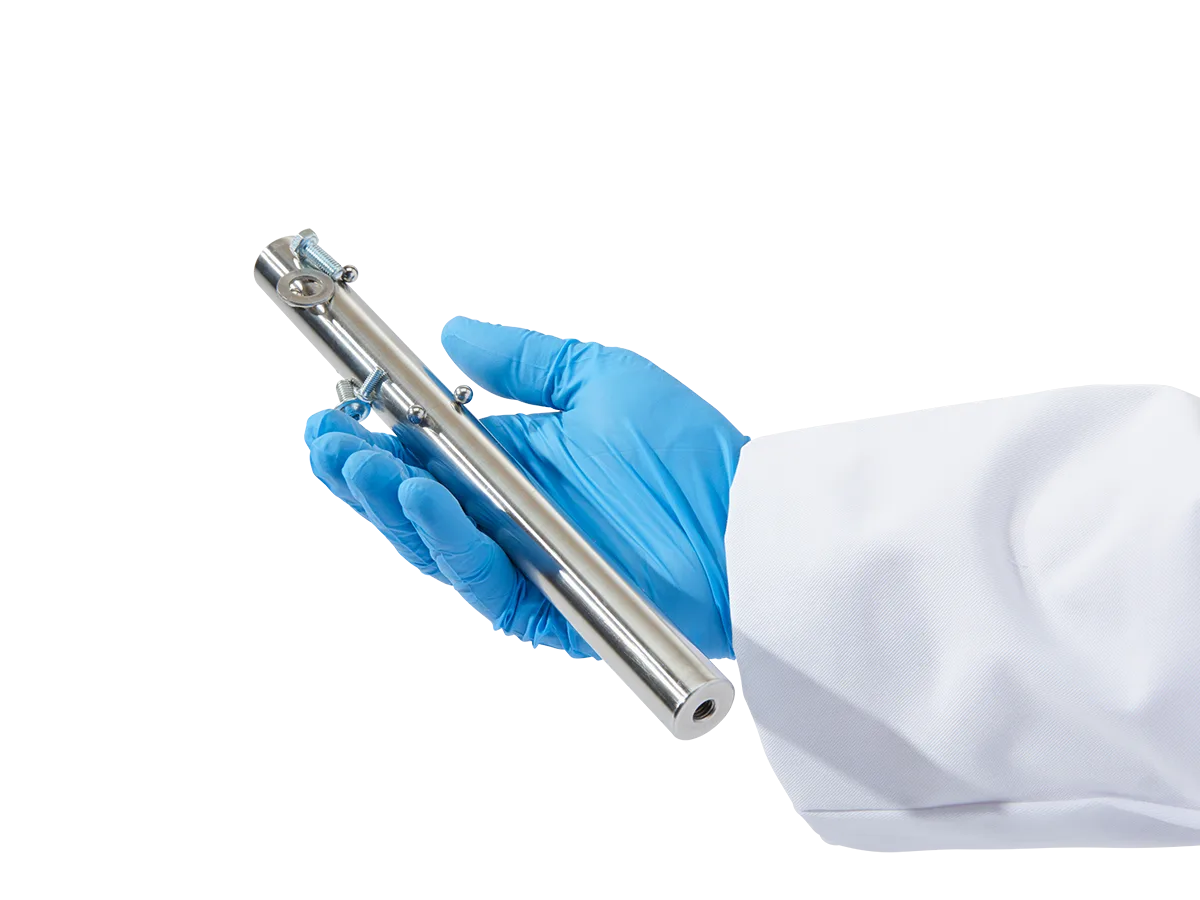
Single tube magnets, or magnetic bars, are the building block of every unit on this page. They are also sold on their own for fitting into chutes, mixers and silo outlets.
Magnets and metal detectors do different jobs, and most food safety plans need both. A magnet removes ferrous metal from the flow and keeps it, without stopping the line or rejecting good product. It also catches particles too fine for a detector to see.
A metal detector catches every type of metal, including aluminum, brass and non-magnetic stainless steel, but it can only reject product, and only above its detection limit. The usual setup puts magnets early in the process to remove most of the metal and protect equipment, and a metal detector at the end of the line as the final check on packed product. We go into this in more detail in our blog post on magnetic separators vs metal detectors.
Goudsmit magnetic separators
Goudsmit Magnetics has designed and built magnets in Waalre, in the Netherlands, since 1959. Its food range uses neodymium magnet tubes in polished stainless steel. The strongest rotating Cleanflow models reach 10,000 gauss on the tube surface, strong enough to hold very fine and weakly magnetic particles.
Hygienic models are designed to EHEDG guidelines, and ATEX versions are available for dusty areas with an explosion risk. Spare tubes, seals and gauss meters for checking magnet strength are also available.
Round easy-clean grate magnet
Rotating Cleanflow for sticky powders
Clean-in-place magnetic filter
Images: Goudsmit Magnetics
Choosing the right separator
When you send an enquiry, these details let us recommend a model quickly:
The product, and whether it is a free-flowing powder, a sticky powder, a liquid or a paste
Throughput (kg/h or m³/h) and the pipe or chute size at the installation point
How the product is moved: gravity, pneumatic conveying or a pump
Temperature and pressure in the line
How often you can stop to clean, which decides between manual and automatic models
Whether the area is classified for dust explosion (ATEX)
What does a magnetic separator do in a food plant?
It pulls iron and steel particles out of a product stream and holds them on a magnet until someone cleans it off. Typical catches are rust flakes, wire from sieves, bolts, staples and fine wear particles from mills and mixers.
Can a magnetic separator catch stainless steel?
Partly. Magnetic grades such as 430 are captured easily. Austenitic grades such as 304 and 316 are only weakly magnetic, but fragments that have been worked or broken off equipment often become magnetic enough for a strong neodymium separator to hold. A metal detector is still needed to catch non-magnetic metals.
What is the difference between a magnetic trap and a magnetic filter?
In practice the terms overlap. Both describe a housing with magnetic tubes installed in a pipeline. Magnetic trap or liquid trap usually refers to units for liquids and pastes such as sauces, juices and dairy, while magnetic filter is used for both liquids and powders.
How often should a food grade magnet be cleaned?
Often enough that captured metal never builds up to the point where the product flow can wash it off again. Many plants start with once per shift, record what they find, and adjust. Automatic-cleaning Cleanflow models handle this for lines with heavy contamination.
Do you supply Goudsmit magnetic separators across the GCC?
Yes. Hydra is a Goudsmit Magnetics dealer based in Dubai and supplies Goudsmit magnetic separators to food manufacturers in the UAE, Saudi Arabia, Qatar, Oman, Kuwait and Bahrain. Contact sales@hydrauae.com or +971 4 591 1958 with your line details for a recommendation.