Types of Laboratory Glassware and Their Uses: A Practical Guide
Posted: July 1, 2026
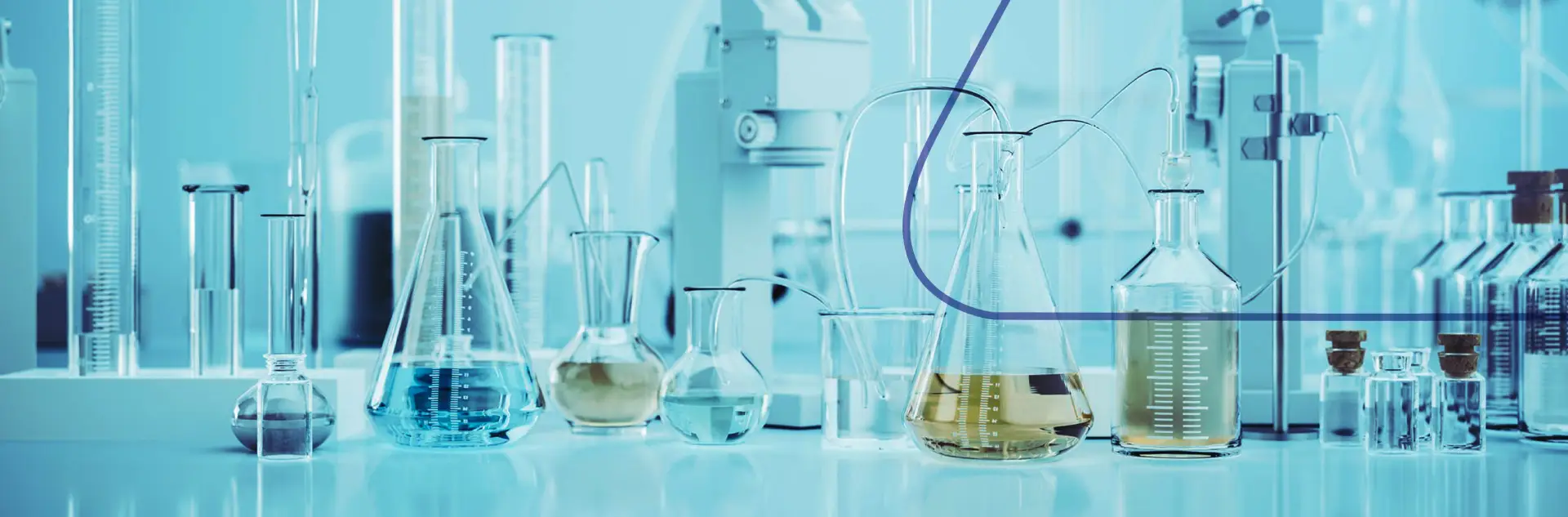
Walk into any working laboratory in Dubai, Abu Dhabi or Sharjah and the first thing you notice is the glassware. Beakers, flasks, burettes, pipettes — each one looks similar at a glance, yet every piece is engineered for a specific job. Choosing the right vessel keeps your measurements accurate, your samples clean and your glassware performing well over heat.
This guide breaks down the main types of laboratory glassware and their uses, so you can equip your lab with confidence. Whether you run a food-testing lab, a school chemistry department, a water-quality facility or a pharmaceutical QC unit, knowing what each item does — and what it is made of — helps you choose well and get reliable results. We supply laboratory glassware across the UAE every day, so the guidance below reflects what laboratories actually order and rely on.
Why laboratory glassware is made of glass (and which glass matters)
Glass remains the material of choice for good reason. It is chemically inert, so it stays stable with most acids, bases and solvents. It is transparent, letting you watch a reaction or read a meniscus. It tolerates heat and can be sterilised repeatedly while holding its shape.
The standard for serious laboratory work is borosilicate glass 3.3 — the same grade sold under names like Glassco and Normax. Borosilicate handles thermal shock (sudden temperature change) and chemical exposure far better than ordinary soda-lime glass, which is why it performs well with Bunsen burners, hot plates and autoclaves. For analytical and heating work, choose borosilicate 3.3 and confirm the glass grade with your supplier before ordering.
The three families of laboratory glassware
It helps to group glassware by what it is designed to do. Most items fall into three families.
1. Containing and mixing glassware
These vessels hold, mix, heat and store samples. Their volume markings are approximate — ideal for general work.
- Beakers — the workhorse of every lab. Cylindrical, with a pouring spout, used for mixing, dissolving, heating and holding liquids, typically from 10 ml to 5,000 ml. For precise work, use volumetric glassware (covered below).
- Erlenmeyer (conical) flasks — the narrow neck lets you swirl contents smoothly and reduces evaporation, ideal for titrations and mixing reactions.
- Florence (round-bottom) flasks — designed for even heating and boiling, common in distillation set-ups.
- Test tubes and boiling tubes — for small-scale reactions and qualitative tests; boiling tubes are thicker for direct heating.
2. Measuring and volumetric glassware
When the number matters, volumetric glassware delivers. These items are calibrated to tight tolerances and classed as Class A (highest accuracy) or Class B.
- Graduated (measuring) cylinders — a reliable volume reading (around 1%). Great for general measuring.
- Volumetric flasks — calibrated to deliver one exact volume, marked by a single ring on the neck. Essential for preparing standard solutions.
- Pipettes — for transferring small, measured volumes. Volumetric pipettes deliver one fixed volume very accurately; graduated pipettes handle variable volumes.
- Burettes — long, graduated tubes with a stopcock that dispense liquid drop by drop; the backbone of titration.
A simple guide to precision:
| Glassware | Relative precision |
|---|---|
| Volumetric flask & volumetric pipette | Most precise |
| Burette | Close behind |
| Graduated cylinder | Moderate |
| Beaker | Approximate only |
3. Procedural and specialised glassware
This family covers glassware built for a specific process.
- Separating (separatory) funnels — for liquid–liquid extraction, draining two layers apart.
- Buchner flasks and funnels — for vacuum filtration.
- Condensers — cool vapour back into liquid during distillation and reflux.
- Desiccators — keep moisture-sensitive samples dry.
- Watch glasses and crystallising dishes — for evaporation, covering beakers and observing crystals.
Glassware accuracy classes explained (Class A vs Class B)
For volumetric items you will see a class marking.
| Class A | Class B |
|---|---|
| Tighter tolerances; often supplied with a batch certificate. | Wider tolerances. |
| Pharmaceutical QC, calibration and regulated testing. | Teaching labs and routine work. |
International tolerances are defined by ISO and ASTM standards, so reputable glassware references them.
How to clean and care for laboratory glassware
Clean glassware is the foundation of accurate results. A practical routine:
- Rinse soon after use, while residues are easy to remove.
- Wash with a laboratory-grade detergent and a soft brush, keeping abrasive pads away from graduated surfaces.
- Rinse with tap water, then a final rinse with distilled or deionised water.
- Air-dry inverted on a rack, or dry in an oven within the glass’s safe limit.
A clean glass surface wets evenly — water forms a continuous film. If water still beads, simply rinse again. Store volumetric glassware vertically and in a safe spot that protects the calibration tip.
Choosing the right glassware for your laboratory
- Holding or mixing? A beaker or conical flask is ideal.
- Preparing a standard solution? Use a Class A volumetric flask.
- Running a titration? A Class A burette and a conical flask.
- Heating or distilling? A borosilicate round-bottom flask and condenser.
- Transferring exact small volumes? A volumetric or graduated pipette.
For audited or regulated labs in the UAE, standardise on borosilicate 3.3 and Class A volumetric items, and keep calibration certificates on file.
Buying laboratory glassware in the UAE
When you source glassware locally, look for three things: the glass grade (borosilicate 3.3), the accuracy class for volumetric items, and a supplier who delivers consistently and supports you with quick replacements. Trusted brands such as Glassco and Normax are widely used across UAE laboratories for exactly these reasons.
Hydra Scientific & Chemicals Trading LLC stocks a full range of laboratory glassware — beakers, flasks, burettes, pipettes, cylinders and specialised items — and supplies laboratories in Dubai, Abu Dhabi, Sharjah and across the Emirates.
About the author
This guide was prepared by the technical team at Hydra Scientific & Chemicals Trading LLC, an ISO 9001:2015 certified supplier of laboratory equipment, instruments and glassware in the UAE. The team works daily with laboratories across food and beverage analysis, water testing, life sciences and education, supplying established brands including Glassco, Normax, Tarsons and Optika.
Need reliable glassware for your lab? Explore our laboratory glassware range or request a quote — our team will help you choose the right grade and accuracy class for your work.
Frequently Asked Questions
What are the main types of laboratory glassware and their functions?
The main types are beakers (mixing and holding), flasks (heating, storage and reactions), burettes (titration), pipettes (transferring exact volumes), graduated cylinders (general measuring) and volumetric flasks (preparing standard solutions). Each is built for a specific accuracy and task.
Why is borosilicate glass used for laboratory glassware?
Borosilicate glass 3.3 handles thermal shock and chemical exposure, so it performs well with heating, autoclaving and reactive chemicals — making it the standard for analytical and heating work.
What is the difference between a beaker and a flask?
A beaker is an open cylinder for mixing and general work, while a flask has a narrow neck that reduces spillage and evaporation and allows controlled swirling or stoppering — ideal for reactions and titrations.
What is the difference between Class A and Class B glassware?
Class A volumetric glassware is made to tighter tolerances for precise, regulated work and often carries a certificate. Class B has wider tolerances and suits teaching and routine use.
How should laboratory glassware be cleaned?
Rinse soon after use, wash with lab detergent and a soft brush, rinse with tap then distilled water, and air-dry inverted. Clean glass wets in an even film; if it beads, rinse again.
Where can I buy laboratory glassware in the UAE?
Hydra Scientific supplies borosilicate glassware and Class A volumetric items across Dubai, Abu Dhabi and Sharjah. Request a quote through the glassware page or contact the team.